
Bhutan GLOF damages irrigation, sparks India flood alerts
A Bhutan glacial lake outburst flood damaged an irrigation project and highway, prompting flood alerts in West Bengal and Assam due to the Sankosh River.
The Cliff News | 30 October 2026
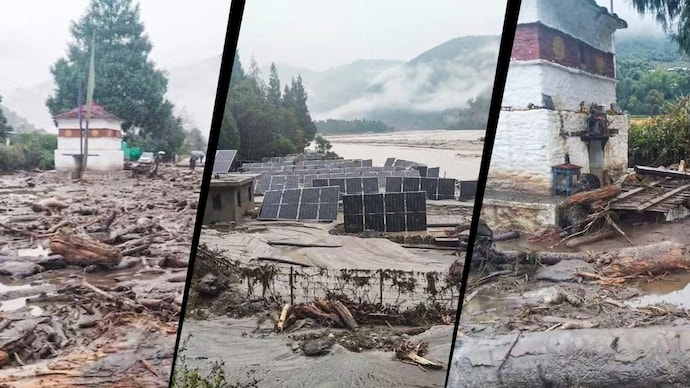
A sudden glacial lake outburst flood (GLOF) in Bhutan has resulted in significant damage to a crucial solar-powered irrigation project and caused disruptions on a major highway. While no casualties have been reported in Bhutan, the event has triggered immediate concerns in India, leading authorities to issue flood alerts for vulnerable areas in West Bengal and Assam. The primary concern is a potential surge in the Sankosh River, which flows downstream from Bhutan.
The affected solar irrigation system, known as the Solar Irrigation Lifting System, is located in the Dochhukha-Dzomlingthang-Ritsa Chiwog, within the Guma Gewog of Punakha district. The flash flood caused partial damage to this vital infrastructure, bringing its operations to a halt. The full extent of the damage is still under assessment, but local reports indicate the system, installed earlier this year to address water scarcity, is currently non-functional.
Bhutan Incident Details
The outburst originated from Shintaphu Lake, also identified as Shintaphu Tsho, on Thursday evening. This lake is situated below Wakila Mountain in Bhutan's Gasa district, in the upper reaches of the Mo Chhu river basin. When glacial lakes overflow, the water typically drains southward into the Mo Chhu, leading to increased water levels downstream.
Shintaphu Lake is recognized as one of Bhutan's 17 potentially dangerous glacial lakes. An official from the National Centre for Hydrology and Meteorology (NCHM) confirmed that a water-level monitoring station exists at Taktsimakhang. However, no alert was triggered at this station prior to the initial reports of the outburst, leaving the full impact and downstream consequences presently unclear.
In addition to the irrigation project, the flash flood swept a substantial amount of debris onto a section of the Punakha-Gasa Highway in the Dzomlingthang area. This information was conveyed by the local Tshogpa (government representative) of Dochhukha-Dzomlingthang-Ritsa village.
Understanding Glacial Lake Outburst Floods (GLOFs)
A Glacial Lake Outburst Flood (GLOF) is a catastrophic event that occurs when a lake formed by melting glaciers releases its stored water suddenly. These lakes are typically held back by natural ice or moraine dams. The failure of these dams, often due to erosion, ice-melt, or seismic activity, can lead to an instantaneous and massive release of water.
The resulting floodwaters can travel at high speeds through mountain valleys, carrying with them enormous quantities of debris. This surge poses a severe threat to settlements, infrastructure such as roads and bridges, and agricultural land located downstream.
Transboundary Impact on India
The Shintaphu Lake is situated within the Punatsangchhu river basin in Bhutan. Crucially, this river is known as the Sankosh River once it crosses into India. This geographical connection makes any sudden release of water from the lake a significant concern for communities residing in downstream areas of India.
Following the GLOF event, the Government of India issued a special advisory, warning of a potential sharp increase in water levels along the Sankosh River. Authorities have alerted districts in West Bengal and Assam about the possibility of a flash flood impacting their areas.
Flood Alerts Issued in West Bengal and Assam
The advisory specifically highlights that a flash flood in the upper reaches of the Punatsangchhu River could lead to a sudden surge in water levels within West Bengal's Alipurduar district and Assam's Dhubri district. Flood alerts have also been extended across several parts of North Bengal, including the Darjeeling hills, Jalpaiguri, and Cooch Behar districts.
In anticipation of the potential threat, the National Disaster Response Force (NDRF) and State Disaster Response Force (SDRF) teams have been deployed to Tufanganj and Boxirhat, both located in the Cooch Behar district. These areas are strategically positioned along the Sankosh River, in close proximity to the India-Bhutan border. Local residents are being actively informed and alerted about the developing situation.
According to the official advisory, floodwaters were anticipated to reach the India-Bhutan border within a timeframe of six to eight hours from the time of the advisory. Authorities in the affected districts have been instructed to maintain close monitoring of the river's water levels and to implement all necessary precautionary measures to safeguard communities and property.