
ISRO Restores NavIC System with NVS-03 Satellite Launch
ISRO successfully launched the NVS-03 navigation satellite, restoring India's indigenous NavIC system to its minimum operational configuration of four satellites.
The Cliff News | 31 October 2026
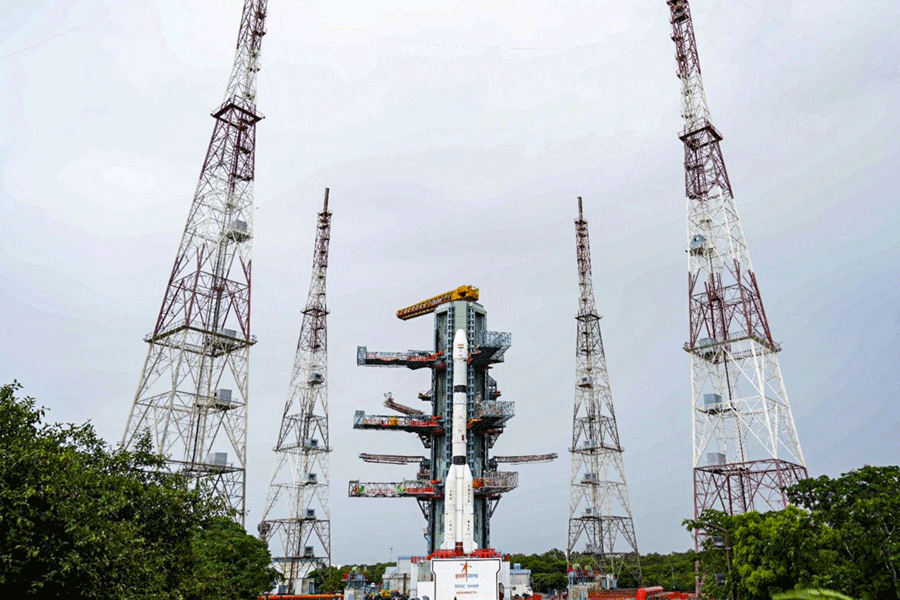
The Indian Space Research Organisation (ISRO) has successfully bolstered India's indigenous navigation capabilities with the launch of its second-generation satellite, NVS-03. Aboard the GSLV-F18 rocket, the launch on Friday night at 11:51 pm from Sriharikota's Satish Dhawan Space Centre has effectively restored the NavIC (Navigation with Indian Constellation) system to its minimum operational configuration of four satellites.
This significant achievement also marks the launch vehicle's fastest turnaround between successive missions, a testament to ISRO's increasing operational efficiency. ISRO chief V Narayanan highlighted the mission's success and outlined future plans to further strengthen the constellation, aiming for enhanced regional positioning, navigation, and timing services for India.
NavIC Constellation Restored and Enhanced
The 50-metre-tall GSLV rocket lifted off after a 24-hour countdown, completing its journey to the Geosynchronous Transfer Orbit (GTO) in approximately 18 minutes. All three stages of the launch vehicle, including the complex cryogenic upper stage, performed flawlessly, demonstrating ISRO's robust engineering and execution capabilities.
The newly placed 2,240-kg NVS-03 satellite will now use its onboard propulsion system to maneuver into its final geosynchronous slot at 32.5 degrees East. Equipped with an indigenous Rubidium atomic clock, the satellite is designed to transmit signals across L1, L5, and S bands, crucial for improving India's independent navigation services.
ISRO chief V Narayanan stated that with the addition of NVS-03, the operational constellation now includes three previously launched navigation satellites, including NVS-01, bringing the total to the required minimum of four operational satellites. This restoration is a critical step for India's self-reliance in navigation technology.
Strategic National Asset and 'One Nation, One Time'
Narayanan emphasized that NavIC serves as a strategic national asset, providing independent access to Position, Navigation, and Timing (PNT) services. Beyond its strategic importance, the system is vital for numerous civilian applications, facilitating real-time tracking of trains, vehicles, and shipping vessels.
He further underscored the NavIC constellation's integral role in the ambitious 'one nation, one time' project. The deployment of indigenous atomic clocks, like the one aboard NVS-03, is fundamental to achieving synchronized timekeeping across the nation.
"NavIC is a strategic national asset which provides independent access to Position, Navigation, Timing services, and it is also used for civilian applications like real time tracking of trains, vehicles, shipping vessels," V Narayanan, ISRO Chief.
The NVS-03 satellite will significantly enhance civilian services. Already, ISRO is tracking 10,400 locomotives and 64,000 fishing vessels in real time, with an additional 15 lakh tracking devices fitted across vehicles nationwide. Under the Pradhan Mantri Matsya Sampada Yojana, ISRO aims to expand tracking to one lakh fishing vessels within the next six months.
Future Expansion and Civilian Accessibility
Narayanan also provided an outlook on the full operationalization of NavIC for civilian mobile phones. He confirmed that widespread availability of NavIC services on common mobile devices will be realized once the complete seven-satellite constellation is established. The current launch brings the system closer to this goal.
ISRO is not resting on its laurels and has immediate plans to further fortify the NavIC constellation. The launch of NVS-04 is planned in five months, followed by NVS-05 in 10 months. These upcoming launches will solidify NavIC's operational resilience and expand its coverage and accuracy.
Technical Innovations and Mission Reliability
In a significant revelation post-launch, ISRO chief Narayanan explained the decision to launch NVS-03 with three pyro valves already open. This strategic move was implemented to ensure mission reliability and mitigate technical challenges faced in an earlier mission, specifically the NVS-02 launch in 2025.
The NVS-02 mission encountered issues when a drive signal failed to reach a critical pyro valve in the engine, hindering orbit-raising maneuvers. A high-level committee, chaired by former ISRO chief Kiran Kumar, validated the decision to fly NVS-03 with open pyro valves after rigorous vibration and shock testing, confirming its safety and efficacy.
The successful injection accuracy of NVS-03 into its designated orbit underscores ISRO's engineering prowess. The achieved perigee of 170.31 km was marginally better than the planned 170.36 km, and the apogee reached 38,080 km against a planned 37,247 km. Narayanan described this accuracy as among the best globally achieved by any launch vehicle.
ISRO's Rapid Pace and Industrial Collaboration
The NVS-03 mission has been accomplished with an impressive 56-day turnaround between successive GSLV missions, showcasing ISRO's accelerated launch cadence. Narayanan also highlighted the significant economic impact of ISRO's projects, noting that approximately 80 per cent of the budget for such missions is invested back into Indian industries, fostering domestic technological advancement and economic growth.
Looking beyond the NavIC program, Narayanan confirmed that the EOS-05 geo-imaging satellite, launched in September, is functioning perfectly and transmitting "outstanding" data. ISRO is actively planning five more launches within the current financial year, including the crucial first uncrewed Gaganyaan mission (G1) and various small satellite missions, underscoring a busy and ambitious roadmap for India's space endeavors.